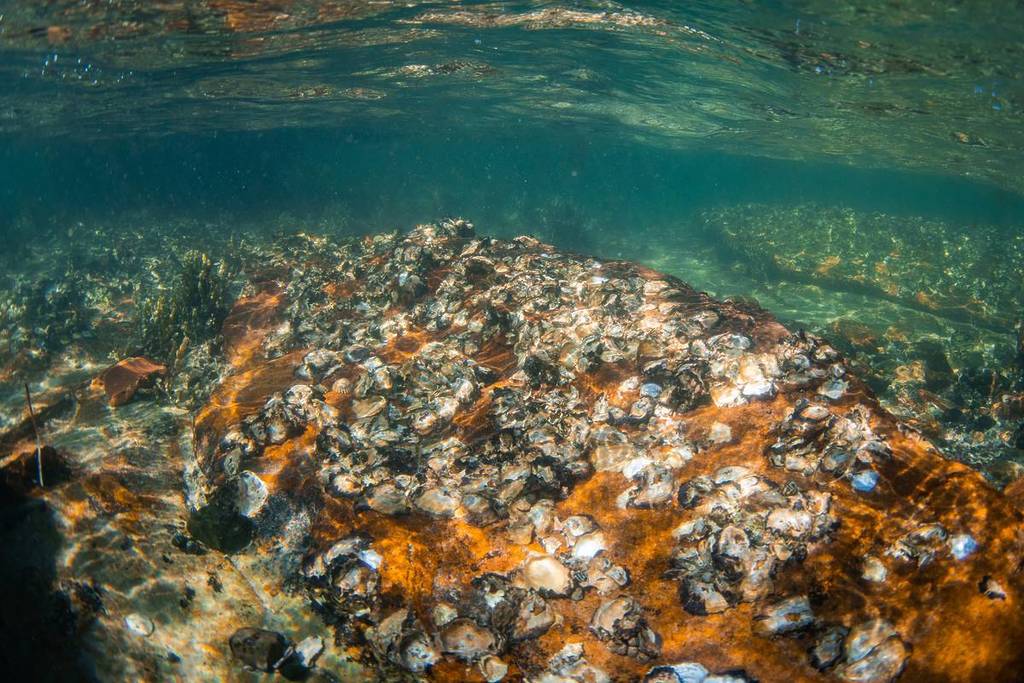
Once upon a time, native oysters carpeted the UK’s coastline like dropped change outside a Liverpool pub. Then overfishing, pollution and disease came along and did what seagulls do to an unattended bag of chips – almost wiped them out. Now their numbers are down by around 95% compared to the 1800s, and the seas that used to be buzzing with oyster reefs are, frankly, a bit bare.
But off the coast of Norfolk, a massive comeback is underway. Conservationists are about to drop around four million oysters onto the seabed by the end of 2026, creating what is set to be the largest restored oyster reef in Europe.
What is happening off the Norfolk coast?
The new reef is being created in the North Sea off the North Norfolk coast, close to spots like Blakeney Point, where the seabed will be transformed from mostly flat sediment into a complex, living structure. Around 40,000 clay blocks, cutely named “Mother Reefs”, will be laid on the seabed, each one pre-loaded with roughly 100 young oysters ready to grow, reproduce and start building a reef of their own.
Once everything is in place, the site is expected to become the biggest single restored oyster reef in Europe, and the largest native oyster restoration project in the UK. The goal is to have the structures fully deployed and the oysters settling in by the end of 2026, after which nature takes over and the reef expands on its own.
Who’s behind the reef project and how does it work?
The restoration is being led by Oyster Heaven, a marine conservation outfit that has already proved its concept by creating reefs off the coast of the Netherlands. In Norfolk they’re working with local seaweed specialists Norfolk Seaweed, combining oyster know‑how with local marine expertise to give the project the best chance of success.
Their “Mother Reef” technique is all about scale and survival: oysters are raised and attached to the clay blocks in controlled conditions before being moved offshore, which helps them survive the vulnerable early stages of life. Once the blocks are on the seabed, the oysters grow, spawn and gradually fuse into a continuous, natural reef, while the clay slowly weathers away in the background like scaffolding after a building job is done.
Why do native oysters matter?
Native oysters are classed as a threatened habitat in Europe because their reefs have all but vanished from places where they once dominated. Without intervention, their numbers are now so low in many areas that they struggle to recover on their own, which is why large-scale, engineered reefs like this are increasingly being seen as essential.
From an ecosystem point of view, oysters are like tiny, non-judgemental water treatment plants. A single adult can filter large volumes of seawater each day, removing particles and helping to clear and clean the water column. Their shells and the structures they build also create nooks, crannies and hard surfaces for fish, crabs, worms and all sorts of other marine life, turning a relatively empty seabed into a busy underwater neighbourhood.
Environmental benefits beyond oysters
As the Norfolk reef grows, millions of litres of water are expected to pass through the oysters every day, which should improve water clarity and support the growth of seagrass and seaweed nearby. That, in turn, boosts biodiversity even further, because seagrass meadows and seaweed beds are important nurseries for young fish and other creatures.
There’s also a climate and coastal resilience angle. Oyster reefs help stabilise sediments and can reduce the energy of waves hitting the shore, potentially making coastlines more resilient to storms and erosion. Their shells lock up carbon in the form of calcium carbonate, and by supporting other carbon‑storing habitats around them, they’re increasingly seen as a form of “blue infrastructure” for a warming world.
Are these oysters for eating?
Tempting as it might be to imagine the world’s most sustainable seafood buffet off the Norfolk coast, these oysters are not being grown for human consumption. The reef is strictly about restoration, not harvesting, so the shellfish there are effectively off the menu – they’re workers, not starters.
That said, the project could still benefit local communities in more roundabout ways. Healthier seas and richer habitats can support nearby fisheries, attract marine wildlife and potentially draw visitors interested in conservation and coastal nature experiences.
If it all goes to plan, the Norfolk reef could become a template for large‑scale oyster restoration across the UK and Europe – proof that sometimes the best way to clean up the ocean is to invite millions of filter-feeding molluscs to move in and do what they do best.