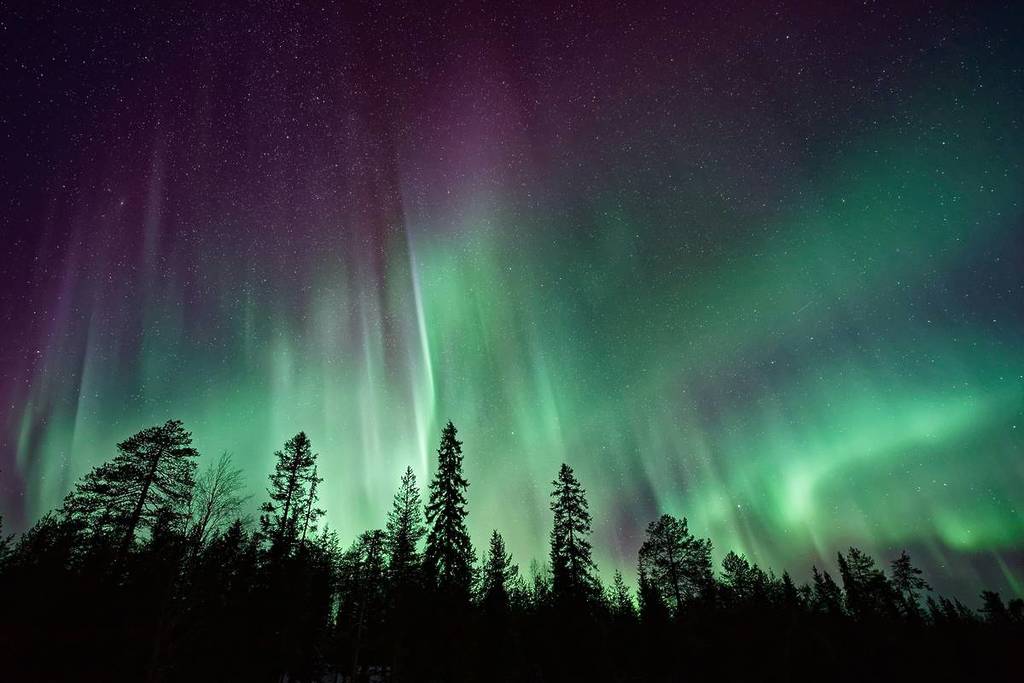
The green hues of the Northern lights lit up our skies last night in clear areas, delighting aurora hunters all the way from Northern Scotland to as far South as Norfolk and Kent.
The first alert for the Northern Lights came in on Monday, September 1, letting us know of a coronal mass ejection with a chance to spot the aurora in the UK. As a result, there is a chance to spot the stunning natural phenomena once again during the dark hours on Tuesday, September 2, going into Wednesday, September 3.
The Met Office forecast for tonight says: “A fast-moving Coronal Mass Ejection (CME) that departed the Sun late on 30 August arrived at Earth late on 1 September. Following its arrival, a significant enhancement of the auroral oval is likely, potentially continuing into 3 September.
At peak activity, and where skies are sufficiently dark and clear, aurora may be visible across much of the UK, potentially without the need for photographic equipment. However, a waxing gibbous Moon may hinder visibility in some areas.”
What is a coronal mass ejection?
According to the Met Office, a coronal mass ejection is “an ejection of material from the sun’s surface into interplanetary space. If the material is directed towards the Earth, the event may result in a geomagnetic storm”. A geomagnetic storm is “a temporary disturbance in the Earth’s magnetosphere”, which is brought on by solar wind.
Where to see the Northern Lights?
To snag the best chance of witnessing the aurora, watchers must go to the darkest spot possible. Beaches, elevated parks and hills work well for city areas, but going into the countryside will increase your chances of seeing the Northern Lights even more. Why not stroll along the nearby beaches outside of Liverpool for some lovely views over the water!
As always, do check the weather forecast before heading out!