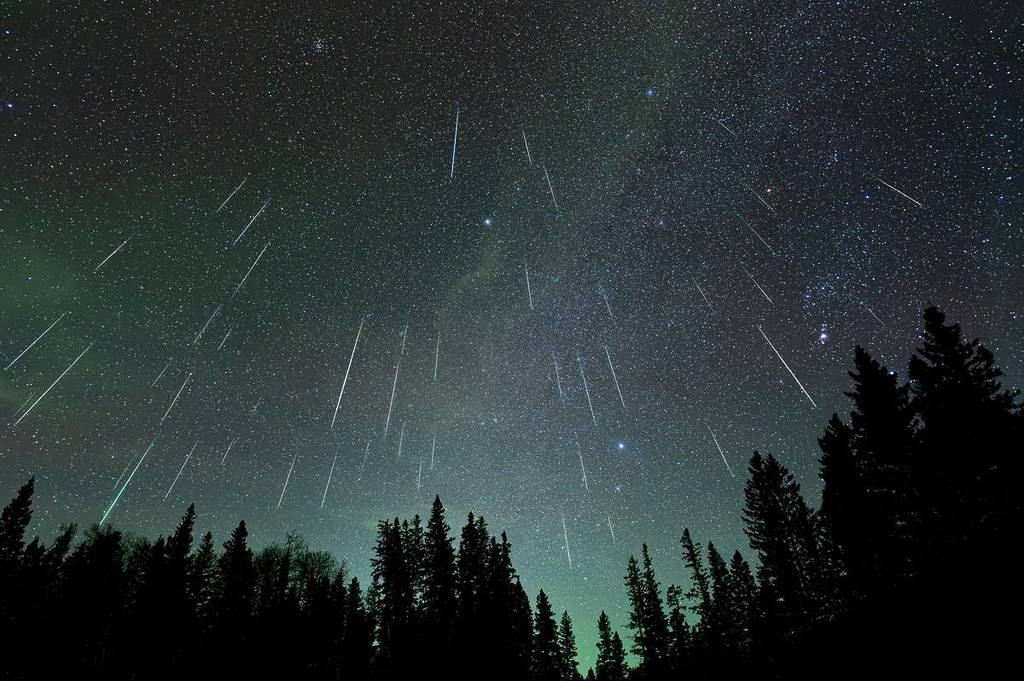
As summer nights stretch into mid-July and August, skywatchers across the UK have a special celestial event to look forward to: the dazzling Perseid meteor shower is set to light up the night sky over the next five weeks.
One of the brightest and fastest meteor showers of the year, the Perseids promise spectacular streaks of light, making this a must-see event for astronomy enthusiasts and casual stargazers alike.
What is the Perseid Meteor Shower?
Meteor showers occur when Earth passes through streams of cosmic dust and debris, often left behind by comets or asteroids.
In this case, the Perseid meteor shower happens as our planet moves through the debris trail of Comet 109P/Swift-Tuttle, a periodic comet named after its discoverers, Lewis Swift and Horace Tuttle.
As tiny particles, roughly the size of grains of sand, enter Earth’s atmosphere at high speed, they burn up and create the glowing streaks of light we call meteors or “shooting stars.”
The Perseids are known for their brilliance and speed. They appear to originate from the constellation Perseus, known as the “radiant” point in the night sky.
Observers looking towards Perseus between midnight and dawn are most likely to spot these brilliant streaks, sometimes catching rare, longer-lasting fireballs that light up the sky in vivid explosions of colour.
When and where to watch the Perseid Meteor Shower 2025 in the UK
The Perseid meteor shower will be active from 17 July to 24 August 2025, with the peak expected on 12 August, when up to 150 meteors per hour can often be seen under ideal conditions. However, a full moon on 9 August may wash out many of the fainter meteors, slightly dulling the show around the peak.
Fortunately, a new moon on 24 July earlier in the shower means darker skies during the coming week – a perfect opportunity to catch the shower’s increasing activity without interference from moonlight.
But UK weather might be a challenge, as cloud cover and thundery downpours are forecast over the coming weekend, possibly obscuring views. Stargazers are advised to check local conditions using resources like the BBC Weather app or website and be ready to seize clear nights when they come.
Tips for an ideal viewing experience
Find a dark, open spot away from city lights and obstructions.
Look to the northern sky, specifically towards the Perseus constellation.
Give your eyes 20-30 minutes to adjust to low light – avoid looking at screens during this period.
No special equipment needed: meteors can be seen with the naked eye.
Peak viewing times are typically between midnight and dawn.
Because meteor showers are unpredictable and highly dependent on weather and location, patience is key. Even if clouds cloud the skies over the UK, flexibility to travel to clearer areas can pay off.
So grab a chair, wrap up warm for those late nights, and look up – the sky is ready to put on a show.