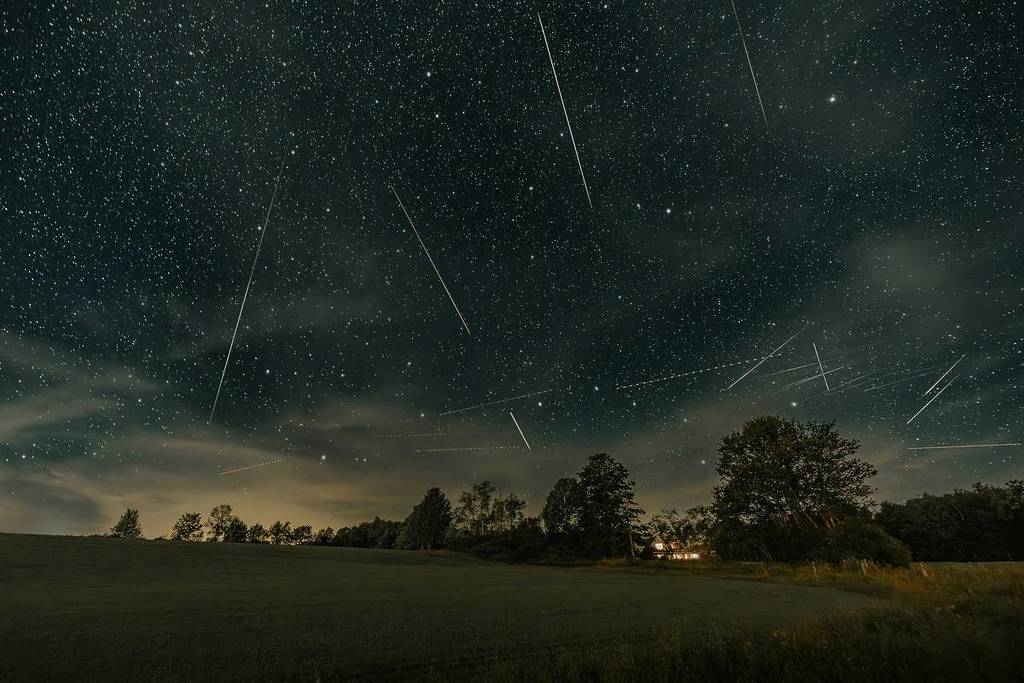

Skywatchers in the UK will get their first major meteor shower of 2026 this month, as the Lyrids return.
While not the most active shower of the year, the Lyrids can still produce bright, fast meteors and the occasional glowing dust trail, making them well worth a look if skies are clear.
When to see the Lyrid meteor shower
The Lyrid meteor shower will be active from April 16 to 25 2026, with its peak expected on 22 April.
During the peak, observers could see around 18 meteors per hour under good conditions, although actual numbers depend heavily on cloud cover, light pollution and how dark your viewing spot is.
Royal Museums Greenwich says the best chance of spotting meteors comes after midnight, with the strongest viewing window from around 2am onwards once the Moon has set.
Where to watch the Lyrid meteor shower
There is no single best location in the UK for the Lyrids, but darker areas away from streetlights will give the best view.
Open fields, hilltops and coastal spots are ideal because they offer wide, unobstructed views of the sky.
The meteors appear to radiate from the constellation Lyra in the eastern sky, so it helps to wait until after midnight when that area has risen higher.
What makes the Lyrids meteor shower special
The Lyrids are one of the oldest known meteor showers, with recorded sightings dating back more than 2,700 years.
They come from debris left by Comet C/1861 G1 Thatcher, which orbits the Sun roughly once every 415 years.
As the tiny fragments hit Earth’s atmosphere at high speed, they burn up and create the brief streaks of light we call meteors.
Viewing tips
The simplest way to watch is to lie back, give your eyes time to adjust and scan as much of the sky as possible.
A blanket or reclining chair will make the experience more comfortable, and warm layers are still a good idea even in spring.
The Moon should not interfere too much this year, which improves the chances of spotting fainter meteors.
A second shower to watch
There is also a bonus meteor event on the horizon, as the Eta Aquariids begin on 19 April and build towards their peak on May 5.
That shower is stronger than the Lyrids, so keen stargazers may want to keep watching the night sky beyond the April peak.